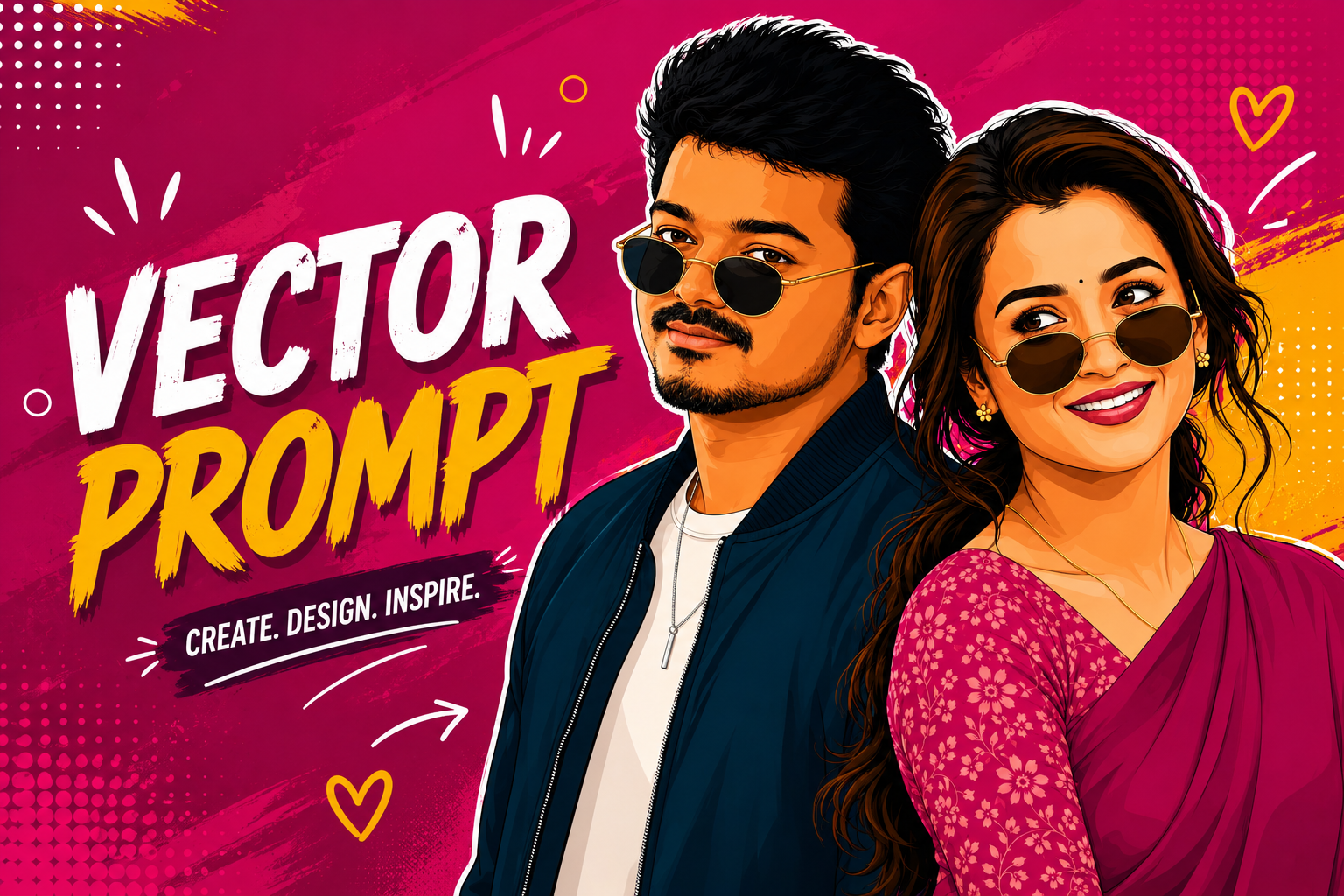
Best Vector Art AI Prompts for Gemini, ChatGPT & Midjourney
AI image generation has completely changed the way people create digital artwork. One of the most popular styles today is Vector Art, which can transform ordinary photographs and creative ideas into clean, colorful, professional-looking illustrations.
If you are looking for the best Vector Art AI prompts, this guide will help you understand how to create better results using AI image-generation and editing tools such as Google Gemini, ChatGPT, and Midjourney.
Whether you want to create a vector portrait, cartoon avatar, social media profile picture, professional illustration, poster, or creative artwork, the right instructions can make a significant difference.
Note: The prompts themselves are provided separately below each section. This article focuses on explaining vector art, its uses, prompt-writing techniques, and how to get better AI-generated results.
What Is Vector Art?
Vector art is a type of digital artwork created using mathematical paths, shapes, curves, lines, and colors. Unlike traditional raster images, vector graphics can generally be resized without losing their sharp appearance when created in a true vector format.
Vector-style artwork is widely used for:
- Logos and branding
- Social media graphics
- Profile pictures
- Digital illustrations
- Posters
- Advertisements
- Character designs
- YouTube thumbnails
- Website graphics
- Business presentations
- Marketing materials
With modern AI tools, users can now create artwork that looks like professionally designed vector illustrations simply by describing the desired appearance.
Why Are Vector Art AI Prompts So Popular?
AI vector art has become popular because it allows beginners and experienced designers to experiment with different visual styles much faster.
Instead of manually drawing every shape and element, users can describe what they want and allow an AI image tool to generate a visual interpretation.
Some of the biggest advantages include:
Faster Design Creation
AI can generate an initial concept in a short amount of time, making it useful for brainstorming and experimentation.
No Advanced Design Skills Required
Beginners can explore professional-looking illustration styles without having extensive knowledge of traditional graphic-design software.
Multiple Creative Styles
The same photograph can be transformed into many different visual styles, including minimalist, cartoon, geometric, retro, colorful, editorial, and futuristic designs.
Useful for Social Media
Vector-style portraits and illustrations can work particularly well for Instagram, Facebook, YouTube, websites, and other digital platforms.
Best Vector Art Styles to Try
There isn’t one single vector style that works for everyone. Your ideal style depends on where and how you plan to use the artwork.
1. Minimalist Vector Art
Minimalist vector artwork uses simple shapes, limited colors, clean lines, and plenty of negative space.
This style is especially useful for:
- Profile pictures
- Business graphics
- Websites
- Personal branding
- Professional presentations
The simpler design can also make an image easier to recognize at smaller sizes.
2. Cartoon Vector Art
Cartoon vector artwork creates a playful and illustrated appearance while retaining important characteristics of the original subject.
It is popular for:
- Social media avatars
- YouTube channels
- Gaming profiles
- Personal branding
- Children’s content
- Digital illustrations
3. Geometric Vector Art
Geometric vector art focuses on shapes such as circles, triangles, polygons, and other structured elements.
This style can create a modern and professional appearance and is particularly suitable for technology, business, and creative branding.
4. Professional Vector Portraits
AI can also be used to create vector-style portraits from photographs.
A professional vector portrait can be useful for:
- LinkedIn profile images
- Business websites
- Employee profiles
- Personal branding
- Social media accounts
- Professional presentations
When creating a portrait, maintaining recognizable facial characteristics and a natural composition is especially important.
5. Retro Vector Art
Retro vector artwork uses visual elements inspired by older advertising, posters, illustrations, and graphic-design trends.
Common characteristics include:
- Vintage colors
- Bold shapes
- Grain-like textures
- Classic poster compositions
- Strong contrast
Retro vector artwork can be particularly effective for posters, merchandise concepts, social media graphics, and creative projects.
How to Write Better Vector Art AI Prompts
The quality of an AI-generated image often depends on how clearly the desired result is described.
A good prompt should provide enough information for the AI to understand the intended visual direction without creating unnecessary contradictions.
Here are the most important elements to consider.
Describe the Subject Clearly
Start by explaining what the AI should create or transform.
For example, you might specify whether the image contains:
- A person
- A product
- An animal
- A character
- A building
- A landscape
If you are using a reference photograph, clearly explain that the uploaded image should be used as the visual reference.
Specify the Vector Style
The word “vector” alone may not always produce the exact appearance you want.
You can describe the desired style using terms such as:
- Flat vector
- Geometric vector
- Minimal vector
- Editorial vector
- Cartoon vector
- Retro vector
- Modern vector
- Luxury vector
- Neon vector
This gives the image model a clearer visual direction.
Choose the Right Color Palette
Colors have a major effect on the final artwork.
Instead of simply requesting a colorful image, you can specify a particular color combination.
For example, a design might use:
- Blue and white
- Black and gold
- Purple and pink
- Red and orange
- Pastel colors
- Monochrome colors
A consistent color palette can make the final artwork look more professional.
Explain the Background
The background should also be considered when creating AI artwork.
Depending on the purpose, you may want:
- A plain background
- A gradient background
- An abstract background
- A studio-style background
- A futuristic background
- A colorful background
- A dark background
For profile pictures, simple backgrounds are often preferable because they keep attention on the subject.
Mention the Composition
Composition tells the AI how the main subject should appear within the image.
You can specify:
- Close-up portrait
- Head and shoulders
- Half-body
- Full-body
- Centered composition
- Three-quarter view
- Side profile
This can help produce a more appropriate image for your intended use.
Vector Art Prompts for Different Purposes
Different projects require different visual approaches.
Below are the major categories you can cover with your own prompts.
Vector Portrait Prompts
Vector portrait prompts are designed for transforming photographs of people into illustrated artwork.
They are useful for profile pictures, personal branding, social media accounts, and professional portfolios.
Add your Vector Portrait Prompt here.
Vector Avatar Prompts
Vector avatar prompts are useful for creating stylized profile pictures for social networks, gaming platforms, websites, and online communities.
Add your Vector Avatar Prompt here.
Cartoon Vector Prompts
Cartoon vector prompts can transform ordinary photographs into playful illustrated characters.
Add your Cartoon Vector Prompt here.
Professional Vector Prompts
Professional vector artwork can be useful for business profiles, presentations, company websites, and personal branding.
Add your Professional Vector Prompt here.
Luxury Vector Prompts
Luxury-style vector artwork can combine sophisticated colors, elegant compositions, and premium visual elements.
Add your Luxury Vector Prompt here.
Neon Vector Prompts
Neon vector artwork is suitable for futuristic, gaming, technology, and modern social media designs.
Add your Neon Vector Prompt here.
Retro Vector Prompts
Retro vector artwork can create a vintage-inspired appearance suitable for posters, social media graphics, merchandise concepts, and creative projects.
Add your Retro Vector Prompt here.
How to Get Better Results From AI Image Generators
Creating a good prompt is only one part of the process. Your input image and editing instructions can also affect the final result.
Use a High-Quality Reference Image
If you are transforming a photograph, use an image with good lighting and a clear view of the subject.
Avoid extremely blurry or heavily compressed photographs whenever possible.
Keep the Main Subject Clear
If the image contains too many people or objects, the AI may have difficulty identifying the main subject.
A clean reference image can make the transformation easier.
Experiment With Different Styles
Don’t stop after generating one image.
Try different vector styles, color palettes, backgrounds, and compositions to find the result that best matches your requirements.
Keep Important Details Consistent
For portraits, you may want the AI to retain important characteristics such as:
- Hairstyle
- Face shape
- Glasses
- Beard or moustache
- Clothing
- Expression
AI image generation can still introduce differences, so results may vary between generations.
Gemini vs ChatGPT vs Midjourney for Vector Art
Different AI platforms have different strengths, interfaces, and image-generation capabilities.
Google Gemini
Gemini can be useful for image-generation and image-editing workflows where supported. It can follow detailed visual instructions and work with reference images depending on the available model and features.
ChatGPT
ChatGPT can help users develop detailed image instructions and, where image generation is available, create or transform images based on those instructions.
Midjourney
Midjourney is well known for highly stylized image generation. It can be useful when experimenting with artistic compositions, illustrations, and creative visual styles.
The best choice depends on the type of artwork you want to create and the features currently available in each platform.
AI Vector Art vs Real Vector Graphics
One important distinction is that vector-style artwork and actual vector graphics are not necessarily the same thing.
An AI-generated image may look like vector artwork but still be a raster image such as PNG or JPEG.
A true vector file, such as SVG, is composed of editable paths, shapes, and other vector elements.
If you need artwork for professional printing, logos, packaging, or large-format design, you may need to convert or recreate the AI-generated design using dedicated vector-design software.
Can AI Vector Art Be Used Commercially?
Commercial usage depends on several factors, including the AI platform’s current terms, the source material, and the intended use.
Before using AI-generated artwork commercially, check:
- The AI tool’s licensing terms
- Commercial-use restrictions
- Copyright considerations
- Trademarks
- Third-party images used as references
- Brand requirements
For business use, it is always a good idea to verify the current terms of the specific AI service you are using.
AaaCommon Mistakes When Creating Vector Art With AI
Avoiding common mistakes can improve your results.
Using Very Short Prompts
A prompt with only “make vector art” may not provide enough information about the desired style.
Adding Contradictory Instructions
Too many conflicting requirements can make the final image inconsistent.
Using Low-Quality Photos
Poor reference images can make it harder for an AI system to reproduce important visual details.
Ignoring Composition
Without specifying the desired framing, the subject may appear too small, too large, or incorrectly positioned.
Expecting Perfect SVG Files
A vector-looking AI image does not automatically mean that the output is a fully editable vector file.
PROMPT:
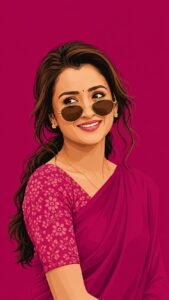
Create this as a 9:16 vertical portrait image.
Using the attached reference photo, recreate the person’s face with high precision — exact facial structure, eyes, nose, lips, and skin tone matching the reference photo closely, side-profile or three-quarter angle as shown.
Style: bold flat vector illustration, clean smooth linework, minimal shading, poster-art aesthetic — no painterly texture, crisp digital vector finish.
Pose: head turned slightly to the side in a relaxed three-quarter profile, one shoulder forward, subtle confident expression, hair styled in soft loose waves pulled into a low ponytail with a few face-framing strands.
Outfit: elegant traditional saree in a single bold monochrome color family (deep teal, burnt orange, or rich magenta — pick one saturated tone), with a delicate floral-print blouse in a contrasting lighter shade of the same color family, small dainty flower-shaped stud earring, thin gold chain necklace, round vintage-style sunglasses pushed slightly down the nose.
Background: solid bold monochrome color matching the outfit’s color family, completely flat with no texture or gradient, high contrast, poster-style minimalism.
Composition: subject positioned in the lower two-thirds of the frame with headroom above, generous negative space around the head, fully filling the 9:16 vertical frame, clean poster-quality layout.
Style: flat vector illustration, bold saturated color palette, minimal linework, high-fashion editorial poster quality, confident and stylish mood.
Frequently Asked Questions
What is a Vector Art AI prompt?
A Vector Art AI prompt is an instruction used with an AI image-generation or editing tool to create artwork with a vector-inspired visual style.
Can I create vector art from a photo?
Yes. Many modern AI image tools can transform photographs into illustrations that resemble different vector-art styles.
Which AI is best for vector art?
There is no single best tool for every project. Gemini, ChatGPT, Midjourney, and other AI platforms can produce different results depending on their current image-generation capabilities and the type of artwork you need.
Can I use vector art for Instagram?
Yes. Vector-style images can work well for Instagram profile pictures, posts, reels covers, advertisements, and other social media content.
Can I create a vector profile picture with AI?
Yes. A clear reference photograph and a well-defined visual style can be used to create a vector-style profile image.
Is AI-generated vector art actually a vector file?
Not necessarily. An image can have a vector-like appearance while still being a raster image. If you require an editable SVG or other true vector format, additional vectorization or design work may be necessary.
Are AI vector images copyright-free?
Not automatically. Copyright and licensing depend on several factors, including the platform’s terms, the source material, and applicable laws. Always check the current rules before using an image commercially.
Final Words
Vector Art AI tools provide an easy way to explore professional-looking digital illustrations without manually creating every element from scratch.
The best results usually come from combining a clear reference image, a specific vector style, appropriate colors, suitable composition, and a well-structured prompt.
Whether you want to create a professional profile picture, cartoon avatar, social media artwork, business illustration, or creative poster, experimenting with different vector styles can help you find the perfect visual result.
You can find and use the Vector Art AI prompts provided on this page to experiment with different styles and create unique artwork with your preferred AI image-generation tool.
Bookmark this page for future updates as new AI image-generation styles and techniques become available.